Charting No-Deposit Incentive Sequences Starting with Slot Bonuses and Extending to Multi-Game Involvement
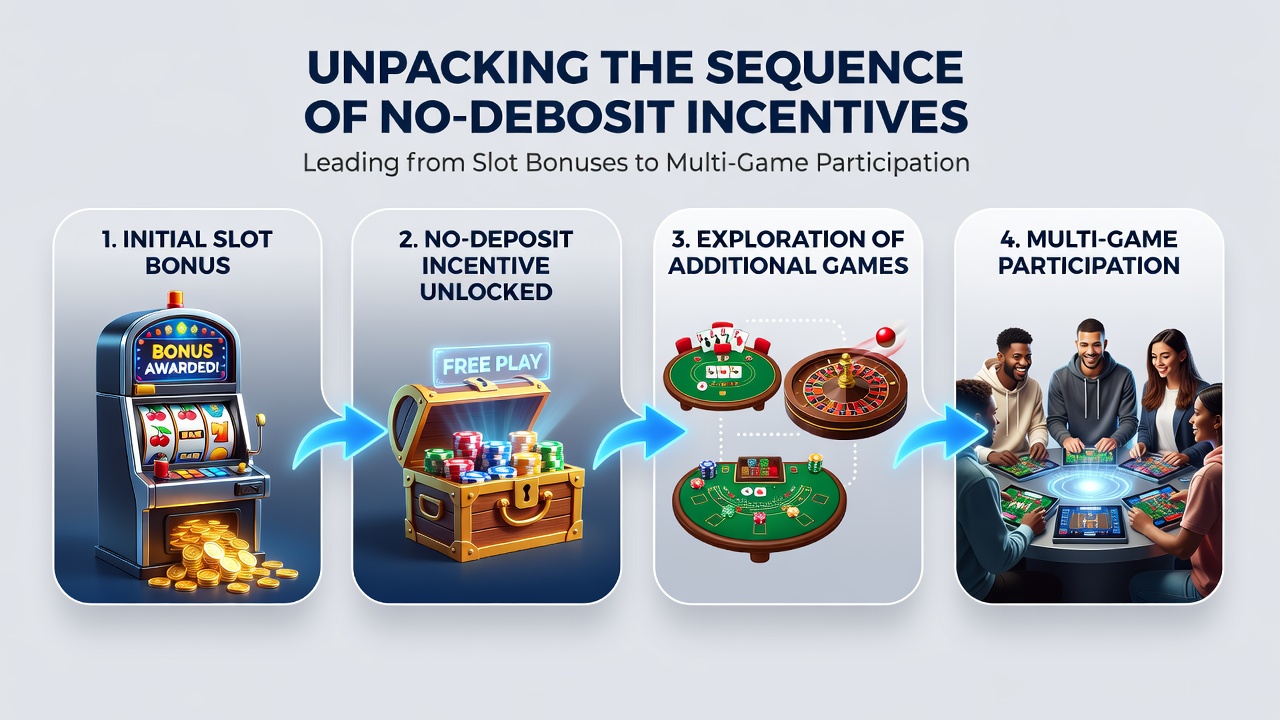
Data from multiple jurisdictions shows that no-deposit incentives often begin with slot-specific offers such as free spins or bonus credits, and operators structure these promotions so that initial play on slots satisfies wagering requirements before players gain access to other titles; this sequence appears in promotional terms across various platforms where players must complete a set number of spins or achieve a minimum playthrough on slots before table games or video poker become available.
Regulatory filings and industry reports indicate that bonus activation typically requires account registration without an initial deposit, after which the system credits a fixed amount of free spins or a small cash equivalent restricted to designated slot machines, and players who meet the playthrough threshold then unlock credits or spins applicable to roulette, blackjack, or live dealer formats.
Initial Activation Patterns in Slot-Focused Offers
Operators design the first stage around high-volatility or medium-volatility slots because these games generate rapid spin counts that help satisfy wagering conditions quickly, while the terms specify eligible games in a list that excludes table games and sports markets until the slot portion completes; this approach appears consistently in August 2026 promotional calendars released by several international operators.
Studies conducted by academic researchers at institutions tracking gambling mechanics reveal that players who start with slot-restricted bonuses demonstrate higher rates of continued engagement once the restrictions lift, because the sequence allows them to sample additional game categories without further deposits, and the data shows this pattern holds across both desktop and mobile interfaces.
Transition Mechanisms to Table Games and Poker Variants
Once slot wagering requirements reach completion, the platform issues either additional free spins or a small cash balance that players can apply to non-slot products, and operators often include video poker or blackjack within this unlocked tier because those games carry different house edges that encourage extended sessions after the initial slot phase ends.
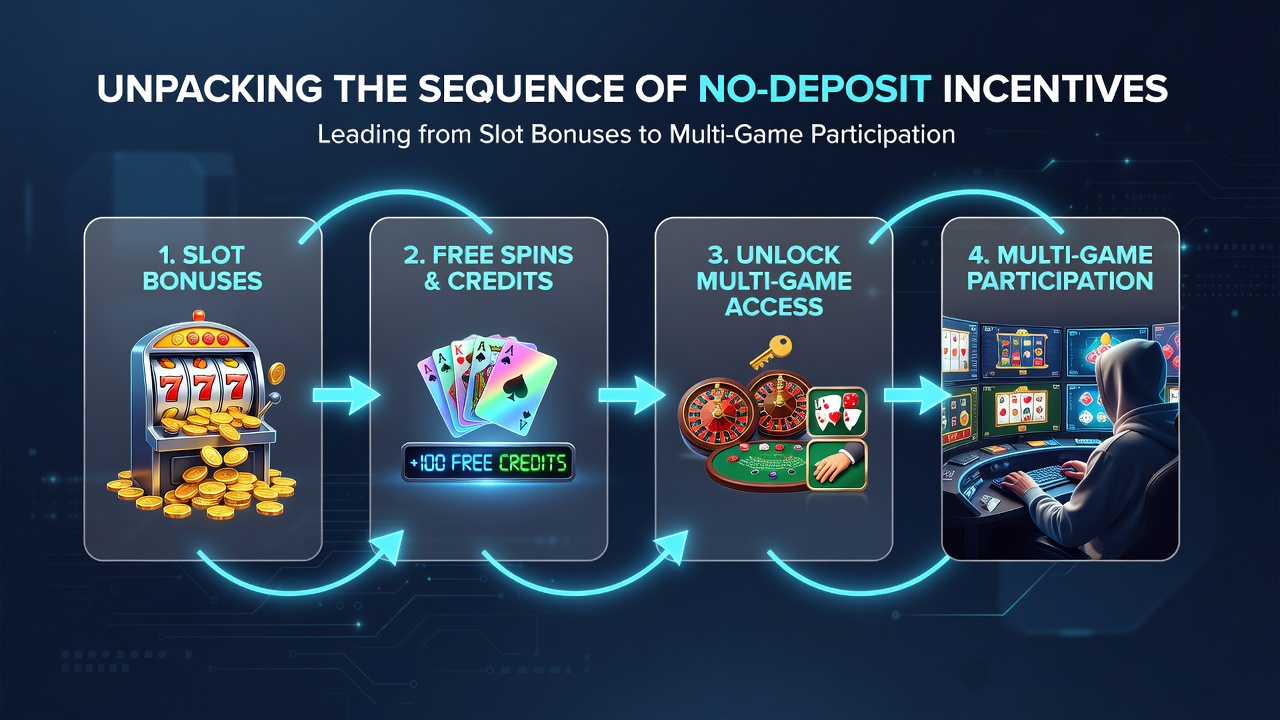
One documented pathway involves converting remaining slot credits into poker freeroll entries, where the system automatically registers qualifying players into no-entry-fee tournaments that award real-money prizes, and this conversion step appears in several multi-jurisdiction loyalty programs that track participation across game verticals.
Figures released by the Alcohol and Gaming Commission of Ontario illustrate how no-deposit sequences that begin with slots frequently expand into live casino participation when operators apply the same bonus balance across multiple verticals, and similar structures appear in reports from Australian state regulators that monitor cross-product engagement.
Expansion into Sports Wagering and Tournament Play
After table game activity registers, many platforms release a final tier of credits that apply to sports markets or racing events, allowing players who began with slots to place risk-free bets on upcoming fixtures, and the transition occurs automatically once cumulative play across prior categories meets operator-defined milestones.
Research published through university-affiliated gambling studies centers indicates that players who follow this full sequence tend to participate in at least three distinct game categories within a single session, and the same reports note that operators track these patterns to adjust future promotional structures.
During August 2026 several operators introduced layered incentives that link slot bonuses directly to multi-game freeroll events, where accumulated play points from slots and tables determine entry into larger prize pools that include both casino and sports components.
Conclusion
Available data across regulatory and academic sources demonstrates that no-deposit sequences typically follow a staged progression from slot-restricted offers through table games and into sports or tournament formats, with each stage governed by explicit playthrough conditions that operators publish in their terms; this structure remains consistent across multiple markets and continues to shape how players encounter new game categories without additional deposits.