Tracing How Initial Reel Credits Draw Players Toward Card Tables and Racetrack Positions
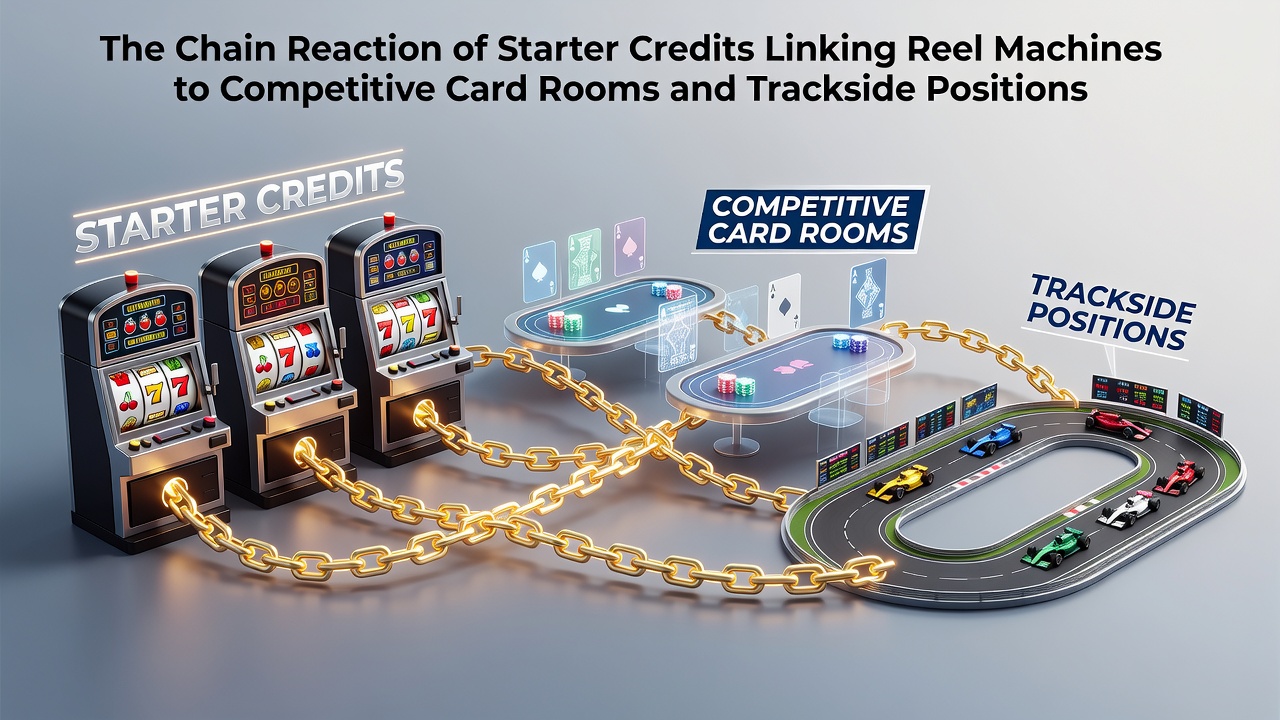
Starter credits appear on reel machines as entry-level incentives that operators issue to new accounts, and these same instruments often carry conditions that push users toward additional game types once the initial spins conclude. Research from the University of Nevada Reno shows that players who redeem slot-based credits frequently migrate to table games within the same venue within a single session, while separate data compiled by the National Council on Problem Gambling indicates that a measurable share of those individuals extend their activity to off-site racing wagers later the same day.
Operators structure these credits with play-through requirements that apply across multiple verticals, so a reel-machine balance that reaches a threshold automatically unlocks access codes for poker tournaments or trackside terminals. In June 2026 several major casino groups updated their loyalty platforms to recognize cross-product progressions in real time, allowing a player who exhausts slot credits to receive an immediate prompt for a low-stakes hold'em seat without leaving the property.
Mechanics Behind Credit Transfers
Systems that link reel machines to card-room software record every credit redemption on a shared ledger, and this ledger feeds directly into tournament registration modules. When a player clears the required spins, the platform issues a separate token that the card-room desk accepts as buy-in currency. Observers at properties in Nevada note that these tokens appear most often between 8 p.m. and midnight, coinciding with peak poker traffic.
Trackside terminals operate under a parallel integration. A subset of credits converts into racing vouchers once the slot session ends, and these vouchers carry expiration windows that encourage immediate use at nearby racebook counters. Industry reports from the Australian Racing Board document similar patterns where digital credits migrate from electronic gaming machines to fixed-odds terminals within the same betting hall.
Player Movement Patterns Observed in 2026
Foot-traffic studies conducted inside integrated resorts reveal a consistent sequence: players begin at banks of reel machines, pause at promotional kiosks to claim starter credits, and then proceed along corridors that lead to both the poker pit and the racebook. In one documented layout at a Las Vegas property, the average time between leaving the slots and entering a card room measured fourteen minutes when credits were active. Those who continued to trackside positions added another nine minutes on average.
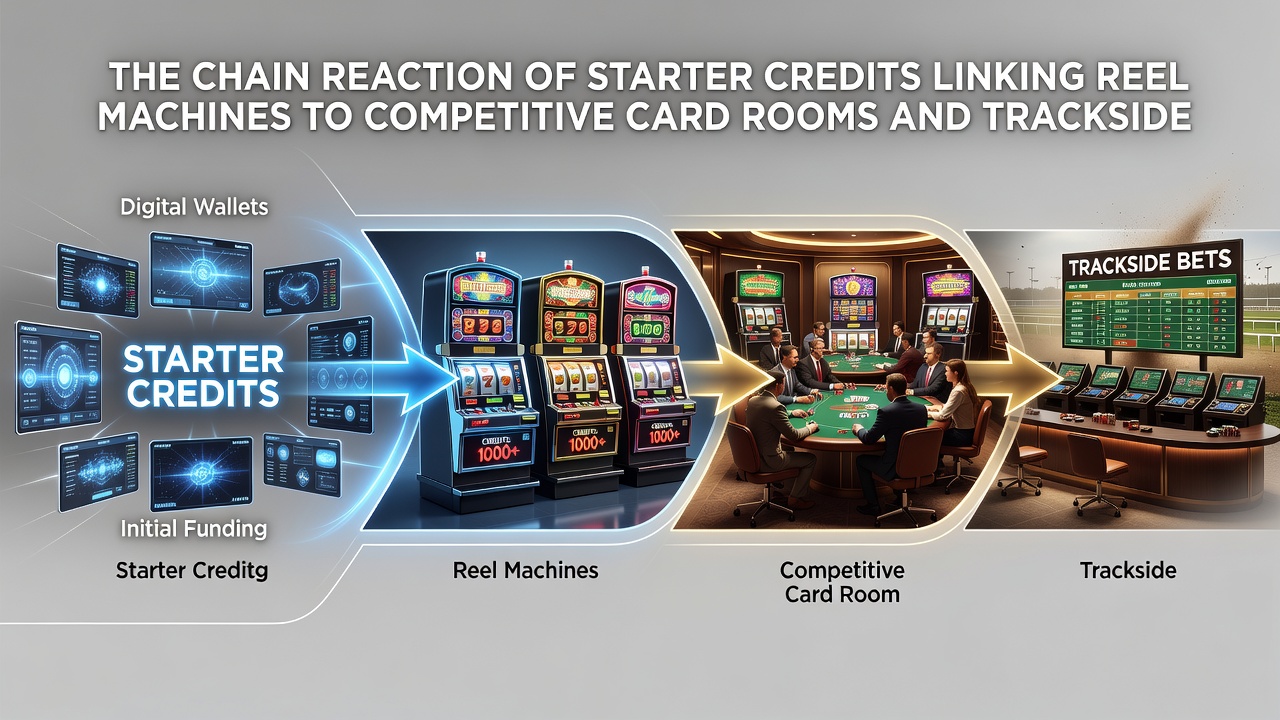
June 2026 data collected by resort analytics teams shows that properties offering seamless credit hand-offs recorded higher table-game occupancy on weekday evenings compared with venues that kept separate reward pools. The same datasets indicate that racing-handle totals rose on days when slot-credit redemptions exceeded seasonal norms.
Regulatory and Operational Frameworks
Gaming control boards in multiple jurisdictions require operators to maintain audit trails for every credit that crosses from one product category to another. These trails must identify the originating reel machine, the amount transferred, and the final destination whether that destination is a poker seat or a pari-mutuel window. Compliance staff review the logs monthly, and discrepancies trigger automated alerts to both the operator and the oversight agency.
Software vendors that supply the unified wallets have added geofencing rules so that credits activated on the casino floor cannot be redeemed at off-site mobile racing apps unless the player physically exits the property. This restriction satisfies rules set by several state racing commissions while still permitting in-house movement between slots, cards, and trackside terminals.
Examples From Multiple Regions
One Atlantic City property introduced a credit that starts on reel machines and converts into a $10 poker tournament ticket after sixty spins. Within three months the card room reported a 12 percent increase in first-time tournament entrants who had never previously played live poker at that venue. A similar program at a Queensland racetrack casino allows credits earned on electronic gaming machines to fund fixed-odds bets on thoroughbred races the same evening, and local racing authorities recorded corresponding rises in both handle and attendance figures.
University researchers tracking these programs note that the conversion rates remain stable across different regulatory environments provided the credit values and play-through multipliers stay within comparable ranges. When operators increase the multiplier beyond a certain threshold, however, the percentage of players who complete the full chain declines.
Conclusion
Starter credits that originate on reel machines continue to function as gateways that route players toward card-room competitions and trackside positions through integrated software, physical layout design, and regulatory compliance measures. Data collected through mid-2026 confirms that these linkages operate consistently across multiple jurisdictions when the underlying systems maintain unified ledgers and clear redemption paths.